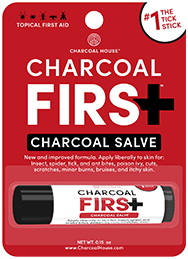
Activated Charcoal Benefits for First Responders
What is activated charcoal used for in remote jungle clinics and metropolitan hospitals?
Food Poisoning
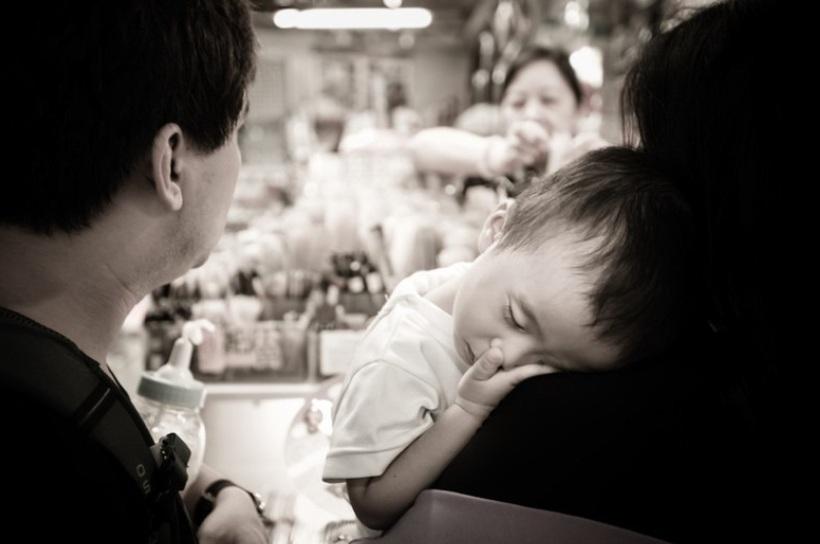
The benefits of activated charcoal reach beyond our comfort zones. I still remember that warm humid afternoon when anxious parents rushed into the clinic with a barely conscious young child in their arms. The doctor, suspecting food poisoning, quickly mixed up a black substance and smeared the thick paste all over the girl’s bare abdomen. Within fifteen minutes the pain and convulsions subsided, and the child was resting quietly.* That was in the mountainous jungles of western Guatemala forty years ago and my first introduction to the numerous medicinal uses of activated charcoal.
What about food poisoning in America today? The CDC estimates that each year 48 million Americans get sick from a foodborne illnesses, 128,000 are hospitalized, and 3,000 die. Will activated charcoal benefit people with gastrointestinal illnesses here in America?
US Hospitals
Dr. Martha works as an Emergency Room physician in a Kentucky hospital.
“I use charcoal routinely for [food] poisonings and drug overdoses … If I want to give it to little ones for diarrhea, I may mix it with mashed bananas. I always have it on hand in the home as an antacid, or for any number of common problems… “
Ben was, for years, a long-distance trucker traveling all over North America.
“I didn’t go anywhere without charcoal. If I got an upset stomach, if I had gas, or diarrhea from something, I always had it on hand as a faithful quick remedy. I simply carried a bottle of [charcoal] tablets with me or I would fill some capsules with the powder if I couldn’t get the tablets. We keep it right at hand here in the kitchen.”
Oh yes, Ben and Martha share the same kitchen.
Do you have activated charcoal pills [tablets and capsules] in your kitchen? You should.
Unconsciousness
Years later, while doing development work in Nepal, the small clinic at which I worked hosted a one-week “health camp”. A group of American doctors, dentists, and their spouses made the exhausting six-hour hike up and down and finally over into the Huwas valley.
Before trekking out, Joyce, the medical director’s wife, took a group on a walk down to the river. As they passed one of the shrines they noticed a young family having a picnic. Returning through the village an hour later they passed the government health station and saw the same little boy from the picnic lying unconscious on the ground.
Joyce, who was herself a nurse, tells what happened:
“Among the group was a pediatrician. Unable to determine the cause, he gave a large dose of antibiotic by injection. While we waited for some response, I described a similar case, but it had been from poisoning. The baby had not been treated and had died. I suggested giving charcoal. With no other options, the doctor decided that charcoal was worth a try.
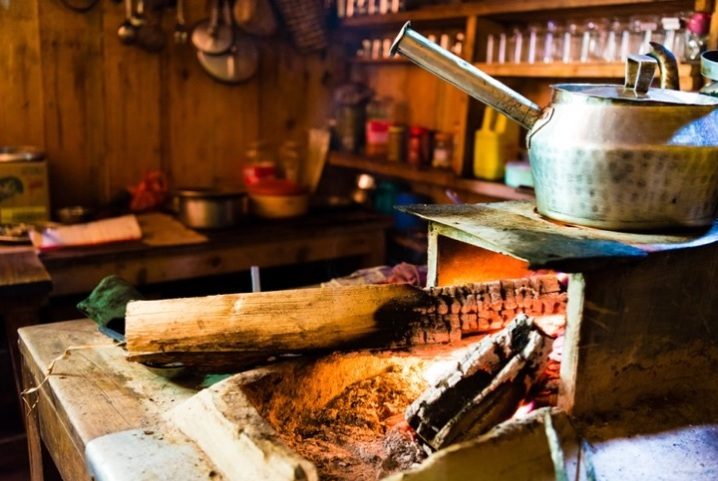
“I quickly went to gather some coals from the nearest cooking fires. We pulverized them as finely as we could and mixed the gritty powder with water. We strained the mixture through a cloth and, because the child could not swallow, administered it through a small tube. We were able to get some of the mixture down, and the child began to struggle against it. That encouraged us to keep trying, and eventually we were able to get about two ounces down. It was difficult to get it into the child because it was gritty and the tube was too small. As the others worked, another woman and I quietly offered a prayer.
“Very soon the child’s breathing, which had been shallow and irregular, returned to normal. We removed the tube, and before the child totally refused to take anymore, we were able to get one more ounce down. By then the boy was completely alert. No more than five minutes passed between the time he swallowed the first bit of charcoal and the time he was back up and running around. We were all absolutely amazed! The doctor insisted that it had to have been the charcoal, because the antibiotic could not possibly have worked so quickly.”*
Emergency Room Nurse
Pauline has been director of the ER at large city hospitals in California, Canada, Alaska, Hawaii, and South Korea. She has witnessed charcoal being used for food poisoning as well as drug overdose and attempted suicide and can testify to the rapid and powerful action of charcoal. Pauline’s recommendation. ‘Leo, just be a man and drink it up!’
While in Hawaii, Leo and Pauline purchased a country property some distance from the city and began clearing it for their new home.
Pauline writes:
“This past Monday Joshua, our six-year old, got stung on the ear by a honeybee. He screamed and screamed. We knew that he had been very sensitive to bug bites, and were concerned that he might have an anaphylactic reaction. While I tried to calm him, Leo went over to the fire pit and got a piece of charcoal. He quickly ground it up and made it pasty with some water. We applied the paste to Joshua’s ear. He was still screaming up to that point, but soon after the charcoal was applied, he calmed down. The swelling stopped and he had no other adverse effects after that.”*
It is understandable that Pauline, working in an ER where medicinal charcoal is always available, might forget to take some with her camping. However, in an emergency, the primitive form of charcoal is still a very good first aid.
What is activated charcoal used for in modern hospitals? Here’s a short list: drug overdose [including from attempted suicide], food poisoning, poisonous plants, kidney and liver dialysis machines, end-stage kidney failure, puritis, second degree burns [German military], breast cancer surgery, wound dressings [MRSA infections and gangrene], anemia of cancer, in ostomy bags for odor control, Chron’s disease, pouchitis, renal disease, laser surgery… and Covid.i
Parents and Caregivers
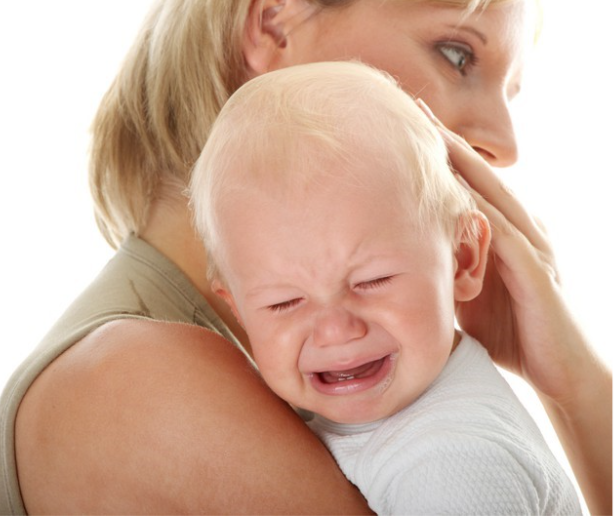
Now, as first responders, your question is, “What are some first aid uses for activated charcoal in the home?”
The more common include: infant colic, indigestion, heartburn, gas, diarrhea, nausea, vomiting, bad breath, poison ivy, poisonous insect bites – bees, wasps, ants, ticks, spiders, mosquitos…
First Aid and Emergency Care
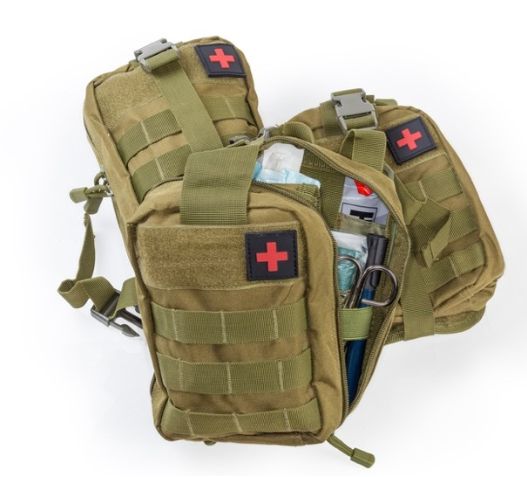
Activated charcoal is well known to adsorb or bind thousands of natural and man-made toxic substances in the gastrointestinal tract, helping reduce their absorption into the bloodstream. Whether they are prescription or street drugs, microbial endotoxins or exotoxins, plant poisons, insect or snake venom, or any number of industrial, or military chemicals, activated charcoal renders them inactive allowing the body to better heal itself as it is designed to.
Why is activated charcoal in military first-aid kits? Why do EMTs carry activated charcoal? Why is activated charcoal listed as an “Essential Medicine” by the WHO? The simple answer is that activated charcoal works so well – for poisoning, for pain and infection.
Do you have activated charcoal pills [tablets], capsules and activated charcoal powder in your home first aid kit, glove compartment, backpack, or travel luggage? You should!
*Stories taken from: CharcoalRemedies.com The Complete Handbook of Medicinal Charcoal & Its Applications
i Charcoal a weapon to fight superoxide-induced disease, injury – Nanomaterials soak up radicals, could aid treatment of COVID-19, July 6, 2020: Rice University Medical Center in conjunction with the University of Texas Health Science Center’s McGovern Medical School and the Texas A&M Health Science Center, announce ongoing development of a simple treatment for Covid-19 using “inexpensive” activated charcoal.
AUTHOR
John Dinsley is the author of “CharcoalRemedies.com: The Complete Handbook of Medicinal Charcoal & Its Applications” [2005]. He and his wife Kimberly are owners of Charcoal House [offering the widest selection of commercial, industrial, and retail activated charcoal products]. Together they travel domestically and internationally conducting workshops on activated charcoal and other traditional natural-remedy practices.