Activated Charcoal – Super Detoxification and Cleansing for Plants and Animals
Charcoal is a hermit at heart. It is not on the hunt for glamor or notoriety, but it has both. Being glamorous (cosmopolitan cosmetics) and notorious (Hollywood special effects) brings with it its share of criticism and skepticism. How can something so black and humble have such a long history of medicinal use (common treatment for anthrax in ancient Egypt), so much modern medical endorsement(World Health Organization Model List of “Essential Medicines”) so many commercial, industrial, and military applications (including first-aid kits), and so much reach (even in spacesuits1)?
Activated charcoal (AC) carries the reputation of being the universal antidote for poisons, making it a champion of detoxification and cleansing protocols. Activated charcoal is known to adsorb toxins from sick people, sick animals, sick air and water, and from sick soils - more than 6,000 [not including most of the 14,000 PFAS “Forever Chemicals”] are known to bind to charcoal. These include many poisons from plants, insects, reptiles, microbial toxins, some toxic minerals, and the endless chemicals and pollutants churned out by industry. Here’s how it works.
First some woody material is burned to produce charcoal. It could be coconut or pecan shell, bamboo, hardwood, or softwood. Most of the moisture and volatile products are cooked off leaving hard lumpy pieces much like we see after a campfire goes out. In the process the charcoal has acquired more surface area internally. The simple charcoal is then “activated” in giant kilns at very high temperatures, in the absence of oxygen. This removes virtually all the moisture content and all toxic volatiles, and dramatically increases that internal surface area. Imagine, if you could unfold all the surface area in one tablespoon of activated charcoal powder (10 grams), its surface area would equal that of three football fields. Through some mysterious chemistry and physics of its own, charcoal can attract a host of very different toxic substances to its extensive surface, bind them, and neutralize their negative influence. That is good news for plants and animals.
Horticultural Charcoal
Probiotic farming with Charcoal vs. Antibiotic farming with Toxic Chemicals
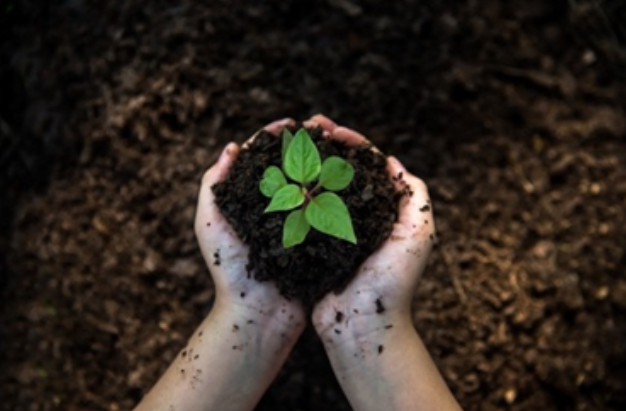
Horticultural charcoal (also known as biochar or agri-char) is becoming an increasingly common soil amendment. Have you ever seen how quickly a field or forest floor can spring back to life after a wildfire? The black char helps to mobilize nitrogen-fixing bacteria, giving everything a much needed shot of energy. As well, charcoal has the enviable reputation of being “Carbon Negative”2 So horticultural charcoal is wise soil management for otherwise uncontaminated ancient jungle soils and unpolluted modern gardens and farms. But today the reality is that most soils that have been under cultivation for any length of time, are contaminated and polluted with any number of man-made chemicals with their toxic residues. So, when it comes to healing sick toxic soils, activated charcoal is the treatment of choice. This is where activated charcoals for plants, lawns, golf greens, farms, excel over horticultural charcoal. As well, ‘biotic’ (“pro life”) effect of charcoal.
Surface Area
The degree to which activated charcoal can work quickly in binding and neutralizing those poisons has much to do with how much surface area it has. It is obvious that the greater the binding surface, the more toxins can be quickly adsorbed to that surface. A hospital grade activated charcoal used for accidental poisoning or in kidney/liver dialysis units has a minimum surface area of 1,200 m2/gram. A quality activated charcoal powder for soil remediation can have upwards of 1,500 m2/g of internal surface area. On the other hand, a quality horticultural charcoal may only have 340 m2/g. It is not difficult to see, when it comes to adding charcoal to soil for emergency care, that activated charcoals can work much more rapidly and broadly than even the best horticultural charcoal.
Here are some examples of bioremediation using activated charcoal for contaminated soil. A city wants to reclaim the right-of-way along a heavily contaminated abandoned railway. The soil is saturated with years of herbicide/pesticide applications. The same is true for a tractor farm wanting to convert to “organic” practices. Where to begin?
Mechanic Shop Parking Lot
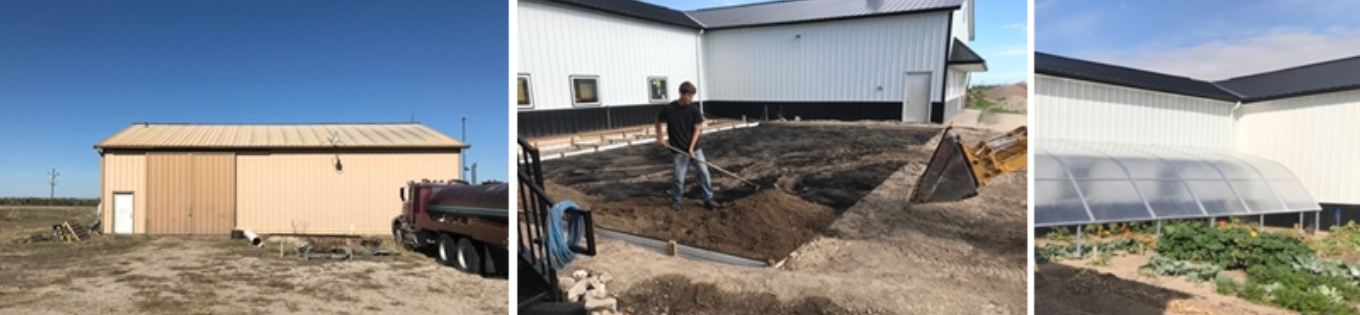
Here is a picture of the parking area in front of a mechanic shop. It had been exposed to thirty years of spilled oil, gas, diesel, hydraulic oil, chemical solvents, PFAS3, and who knows what else. The ground was essentially sterile. Even weeds struggled. In 2023, a large addition was built around that parking area which was converted into a garden and greenhouse. They turned in 200+ pounds of activated charcoal, as well as a hundred pounds of plain biochar. They added composted organic cow manure with trace minerals and planted a variety of outdated vegetable seeds. At harvest time, they were pleased with their harvest of sweet corn, potatoes, carrots, cabbage, collards, zucchini, and pie pumpkin. There were some poor areas, so they turned in more activated charcoal and biochar this spring and expect even better results.

Commercial Poinsettias Nursery
Some years ago, one of the largest U.S. poinsettia nurseries had a pre-holiday season nightmare. Their entire crop was drooping and dying. A popular pre-emergent, at 20 times the recommended concentration, had been applied in one section of the greenhouses and had been airborne to the rest of the nursery. Within 24 hours they applied ninety pounds of high activity agricultural activated charcoal to the affected areas. Just two days later the manager reported he was thrilled at how effective the initial results had been. They applied two more sacks for follow-up treatment. After a few weeks they were able to move the plants back into their greenhouses. You wouldn’t have known, but charcoal helped to brighten up that Christmas.
Neutralize Pre-emergent in Nursery Stock
A charcoal slurry can be made by adding a few cups of activated charcoal powder to a bucket of water. When transplanting the plants, dip the roots, soil and all, into the slurry. Most herbicide, turf builder, pesticide, and weed killer will be completely neutralized with this method.
Rye Grass Seed Industry
All that beautiful lush green sod used around new construction sites and landscape projects comes at a price to the soil on sod farms. Heavy applications of herbicides are heavily applied For years the ryegrass seed industry used activated carbon produced from select grades of coal as a preferred treatment for reducing toxic preemergent residue and improving seed germination. Over the past decade, hardwood-based activated-charcoal products have become more widely favored. Field trials by Oregon State University have shown wood-based activated charcoal applied at 25 lbs/acre (plus 40 gal/acre of N and P) to be far superior to coal-based activated charcoal applied at twice that rate.
Organic Carrots
‘Organic Carrots’
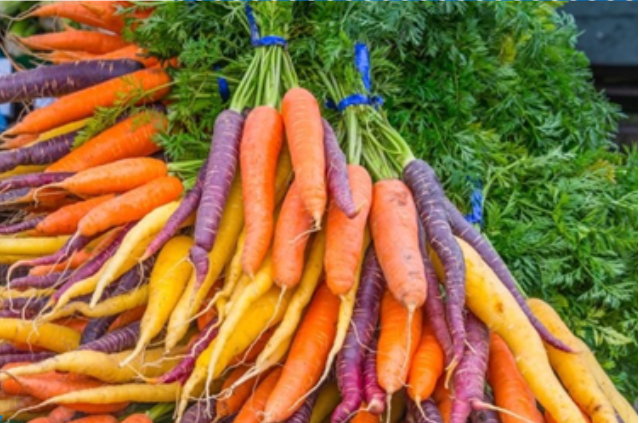
How effective can the right kind of activated charcoal be in neutralizing the buildup of soil toxins from commercial chemical land management? Some years ago, during a conversation with the sales rep for a large, activated charcoal manufacturer, I was told that the company’s product was widely used in agribusiness. “What for?”, I asked. “Well, for example, it is used when growing large crop of ‘organic’ carrots.” “How so?” “The grower, after cultivating the area, applies a total herbicide that kills everything in days. After 7-10 days the grower returns, treats that entire field with our activated charcoal for plants, and seeds a crop of ‘organic carrots’. That activated charcoal works so quickly and extensively that the remaining trace amounts of herbicide become negligible!” Whether that was mostly sales hype or not, the reality is that the right kind of activated charcoal can work just as fast in cases involving poisoned children or adults in an emergency ward as it does in a quarter section of contaminated farmland, or a toxic backyard garden.
Poisoned Pineapple Plantation
A large chemical company owned a large pineapple plantation in Hawaii. The company had used a competitor’s potent herbicide to control weed growth between the planting rows and along the edges of the fields. The destruction was general. The company then applied about 240,000 pounds of activated charcoal within two weeks, allowing replanting to begin.
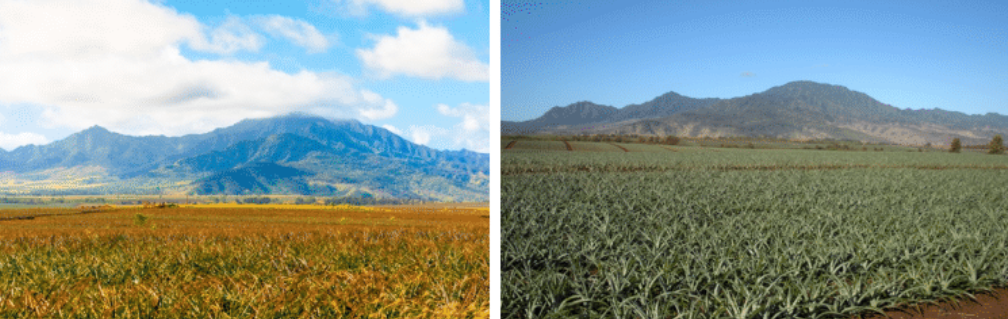
‘Pro-biotic’ activated charcoal has been a savior for countless patches of land that have been innocently or ruthlessly exposed to short-sighted ‘anti-biotic’ chemical practices or are the victims of toxic drift. What about animals?
Charcoal Detox and Cleanse for Animals
Sick soils produce sick food that often leads to sick guts. The use of charcoal for animals occurs in the wild, on feedlots, and in the home.
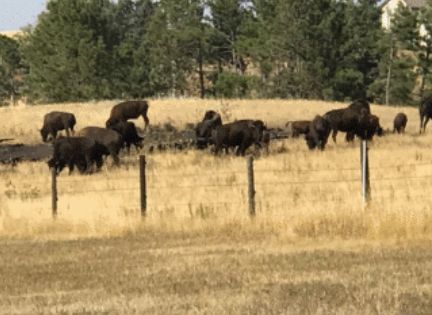
Here is a herd of buffalo in Nebraska foraging on charred timber from a controlled burn.

Here are some Red Colobus monkeys in Jozani forest, Zanzibar, Tanzania, searching for chunks of charcoal - their antidote for upset tummies from eating wild almond leaves.
Old Rats
In one animal study, Dr. V. V. Frolkis, a famous Russian gerontologist, and his colleagues, demonstrated that the lifespan of old laboratory rats increased by up to 34% by feeding them charcoal in their diet! Toxins, including free radicals, are believed to play a significant role in aging. But these ‘loose cannons’ may bind with charcoal and form a stable matrix in the gut until they are eliminated from the body. Researchers concluded that the binding these toxins in the intestinal tract before they are absorbed or reabsorbed into the system may be one mechanism that allowed the rats to live longer and healthier. This4 and numerous other studies, refute the false claims that activated charcoal suppresses nutrient absorption from food.
USDA Approval of Activated Charcoal - Technical Evaluation Report of Activated Charcoal for Livestock [March 3, 2021]
The United States Department of Agriculture (USDA) National Organic Program (NOP) has approved the use of activated charcoal “from vegetative sources… in organic livestock production,”… as well as “an ingredient in or on processed products labeled as ‘organic’ or ‘made organic’”. The report also highlighted:
“Activated charcoal and charcoal additives in animal feeds have been reported to increase feed intake, promote weight gain, and improve the quality of animal products such as eggs, milk, and meat (Kutlu et al.2001, Toth and Dou 2016, Mgbeahuruike et al. 2018, Kalus et al. 2019, Lao and Mbega 2020). The addition of charcoal or activated charcoal to animal feeds adsorbs toxins that may have been ingested by the livestock within the agro-ecosystem (e.g., tallow oleander, yew, bitterweed) or present in animal feeds due to improper collection or storage. The addition of activated charcoal to animal feeds is reported to offer protection from potential toxins within the feed as well as naturally occurring toxins in plants that may be ingested through grazing (Poage et al. 2000, Oluwafemi et al. 2014, IARC 2015, Mgbeahuruike et al. 2018, Kalus et al. 2019, Lao and Mbega 2020). The application of activated charcoal for improving milk quality is the same as the veterinary applications described above.
The quality of animal products, such as eggs, milk, and meat, is improved by preventing potential toxins from being absorbed by the animal and passing into these products (Oluwafemi et al. 2014, Mgbeahuruike et al. 2018, Kalus et al. 2019, Lao and Mbega 2020). Incorporation of charcoal and activated charcoal into animal feeds has been reported to increase quantity of eggs and egg quality with reductions in the number of cracked eggs (Kutlu et al. 2001, Kalus et al. 2019, Lao and Mbega 2020). The incorporation of activated charcoal (1%) into animal feeds has also been reported to reduce mycotoxins in milk by up to 76% (Rao et al. 2004, Kalus et al. 2019, Lao and Mbega 2020). There have also been reports of the incorporation of activated charcoal into animal feeds providing protection from harmful microbes, possibly by providing environmental niches that promote the growth of beneficial bacterial communities (Knutson et al. 2006, Calloway et al. 2012).”5
Loss of Nutrients - Activated charcoal does not degrade nutrient uptake.
Charcoal added to the diet of sheep for six months did not cause a loss of nutrients, as compared with sheep not receiving charcoal. …5% of the total diet was charcoal. It did not affect the blood or urinary levels of calcium, copper, iron, magnesium, inorganic phosphorus, potassium, sodium, zinc, creatinine, uric acid, urea nitrogen, alkaline phosphatase, total protein or urine pH.
Charcoal Feed Supplement
Notice these benefits6 when feeding charcoal powder to domestic animals including cattle, pigs, and poultry:
- increase in milk production for cattle
- decrease in mastitis
- reduction in mortality for pigs and laying hens
- overall disease reduction
- improved feed:weight ratio of pigs
- 50% reduction in manure odor
The charcoal powder was fed to cattle as a feed additive, at a rate of 1 – 2% (by volume). Alternatively, it may be added to the drinking water. Used in this way, it will reduce manure odor by 50%.
Five-year old English Cream Retriever (Cotton)
Owner’s diary:
December 2023: started getting sick. Diagnosed with pneumonia and given antibiotics. Got sicker. Sore back leg. Tested positive for Blastomycosis and glaucoma because of fungal infection. Lost vision in one eye. Running into walls, confused, collapses as soon as he goes outside, no longer wants to stay outside because sunlight hurts his eyes, drool was thick like glue, had numerous lesions on his body. Getting worse.
March 2024. Day 1: 1/3 cup of activated charcoal powder mixed with 1/2 can of wet dog food. Ate that and same amount day 2. After no bowel movements for a week, he had one that day. Day 3: ate a whole can of dog food mixed with 2/3 cup of charcoal - half at lunch and half at dinner. Day 4 and 5: ate one and half can of dog food mixed with almost a cup of charcoal spaced out two different times. Day 6 and 7: 1/2 cup of charcoal with a can of food. Improvements daily. Full appetite returned. Going outside on his own and going to the bathroom daily, no longer drooling, lesions getting better. Eyes have cleared up, vision in compromised eye is much better. No longer running into walls and he can find his treats on the floor again. “Cotton is spending lots of time outside and once again he is greeting us at the door with his toy in his mouth.” Shannon
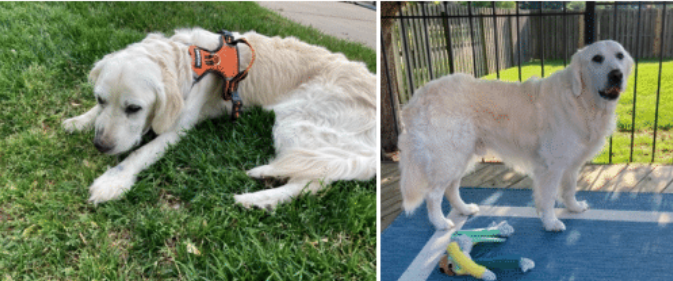
March 2024 to May 2024
Infected Wounds
Microbes do not have teeth, so how do they eat flesh? They have endo/exo toxins that dissolve tissue so they can then ingest their food. Activated charcoal can effectively neutralize these microbial digestive toxins, and the microbes quickly starve to death. The body takes over and healing proceeds.
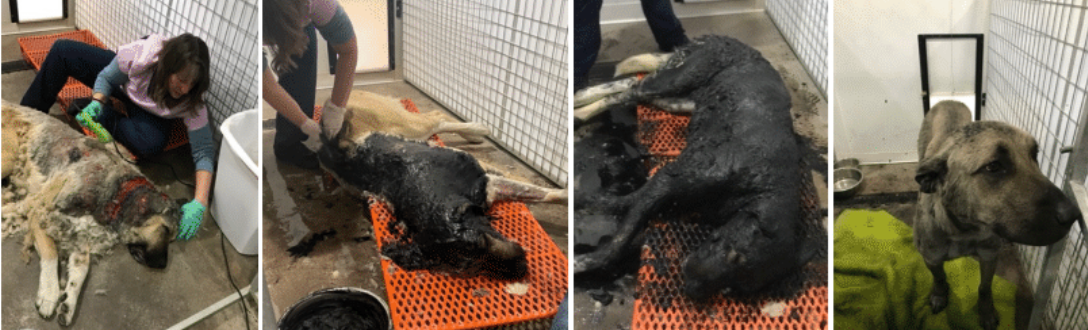
Pseudomonas
Barny [150-pound Romeo] went a-courting and got shot by the neighbor with a 410 shotgun at close range. Dr. Regina saved his life but not his hide. After she removed all the pellets and part of his ear, Barny was on the road to recovery when he came down with an unstoppable case of Pseudomonas. After experimenting with antibiotics, Dr. Regina consulted “experts” who said there was nothing left that would help, not even Colistin. The verdict was to end his suffering. By this point, he had lost 50+ pounds and was so irritable that no one could get close to him. Dr. Regina got signed permission from the owners to allow some experimenting. Barny was anesthetized, then shaved almost nose to tail. An assistant mixed up a two-gallon bucket of activated charcoal paste and completely covered Barny with it. He looked like a burned corpse. The next morning, Barny woke up ready to eat. He is now back in his prime but sticks closer to home.

Cure all
Charcoal makes no claim to being a cure all. In fact it makes no claim to curing anything. What it does boast is the ability to adsorb and neutralize thousands of natural and manmade poisons and toxins. Remove that toxic burden from the soil, the animal, the person, and they are better able to heal themselves the way the Creator designed them to. But, over time, charcoal has cured a lot of skeptics.
1 NASA developed the charcoal space “Toot Trapper” – there are no windows in spacesuits
2 Carbon negative – the net effect of removing carbon dioxide from the atmosphere rather than adding it.
3 PFAS: Per- and Polyfluorinated Substances. “Activated carbon treatment is the most studied treatment for PFAS removal.”
https://www.epa.gov/sciencematters/reducing-pfas-drinking-water-treatment-technologies 8/23/2018
4 V. Frolkis, et al., Enterosorption in prolonging old animal life, Experimental Gerontology, 19; 217-25, 1984
5 https://www.ams.usda.gov/sites/default/files/media/USDANOPActivatedCharcoalTechnicalReport.pdf
6 Food & Fertilizer Technology Center (Asia Pacific Region in cooperation with Kwang Hwa Jung National Livestock Research Institute, Rural Development Administration, Suwon, Republic of Korea)
Author
John Dinsley is the author of Charcoal Remedies.com: The Complete Handbook of Medicinal Charcoal & Its Applications [11th printing]. He and his wife Kimberly are owners of Charcoal House LLC. Their business motto is “Purify Your World®” Together they travel domestically and internationally conducting workshops on the prevention and treatment of common diseases using simple natural remedies.