The Role of Activated Charcoal in the Removal of PFAS – Forever Chemicals
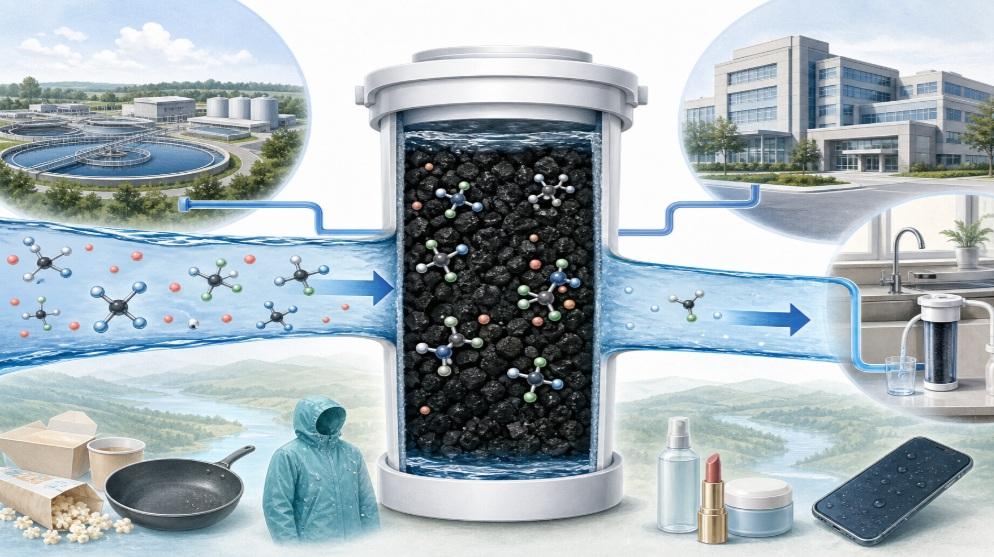
By now, most everyone is familiar with the term PFAS, "Forever Chemicals" - ticking time bombs. What everyone is not aware of is that Activated Charcoal is the treatment of choice when it comes to neutralizing these powerful synthetic toxic compounds. PFAS stands for Per- and Polyfluoroalkyl Substances. It is estimated that there are between 10,000 and 15,000 unique chemical compounds, with more compounded yearly. Here is a short-list of 8,163 on the EPA website. Since as early as 1938 and the accidental discovery of Teflon, these chemicals have been primarily developed to be water, stain, and grease resistant. They are characterized as having very strong carbon-fluoride bonds that do not break down in nature or the human body. The half-life can extend to 5+ years. This makes them a perpetual environmental and public health risk.
Health Risks – You should be concerned.
PFAS exposure is linked to reduced immune response, reproductive issues, developmental delays in children, elevated cholesterol, thyroid disorders, and increased risks of certain cancers. These are very serious side effects especially when we consider our exposure. Because of their tenacious resistance to breaking down naturally, they can cross vast distances and, over decades, accumulate globally in food ecosystems, and in our bodies.
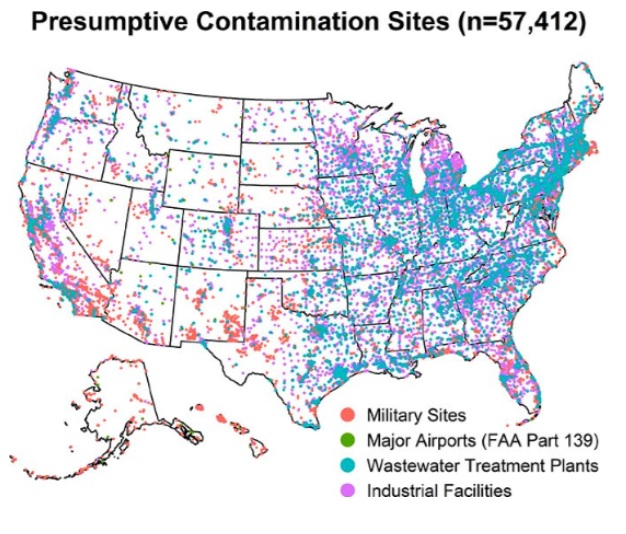
(Source: Environmental Science & Technology Letters)
Hiding Places
Today, PFAS are everywhere, including in the blood and breastmilk of people and wildlife.
Consumer goods include nonstick cookware, waterproof clothing [from baseball caps to sandals, t-shirts and swimsuits], outdoor and indoor furniture, mattresses and carpets [marked “stain-resistant” or “waterproof”], cosmetics [e.g. hair conditioner, foundation cream, sunscreen etc.], dental floss, paper/cardboard food packaging [e.g. takeaway containers, popcorn bags, pizza boxes, ready-made cakes etc.], diapers, and... oh yes, in smartphones of course. Also found in eggs, meat, seafood, and in almost all U.S. beers.
Here is a long list of common products that routinely use PFAS.
Governmental Oversight
Because of widespread publicity, and more and more damning research, regulating agencies are also more and more restrictive in both application and development of PFAS. While public education, clear labeling, testing, taxes and fines, litigation, and mandatory cleanup are worthwhile strategies, none of them replace personal responsibility. Regulate your own home, be your own investigator and inspector, make hard decisions, and be your own doctor.
Treatment of Choice
The two most widely known, the most proven methods, the most effective push back on PFAS forever chemicals are #1 Activated Charcoal [AC] and #2 Ion Exchange Resins. How surprising to find these treatment protocols missing on some websites dedicated to personal health and environmental concerns. But the Environmental Protection Agency [EPA] has for many years recommended activated charcoal without reservation:
PFAS: Per- and Polyfluorinated Substances. “Activated carbon adsorption can be used in drinking water treatment facilities, in water systems in hospitals or individual buildings, or even in homes at the point-of-entry, where water enters the home, or the point-of-use, such as in a kitchen sink or a shower.”
EPA website 8/23/2018
Activated Charcoal Products for Domestic/Home Water Purification
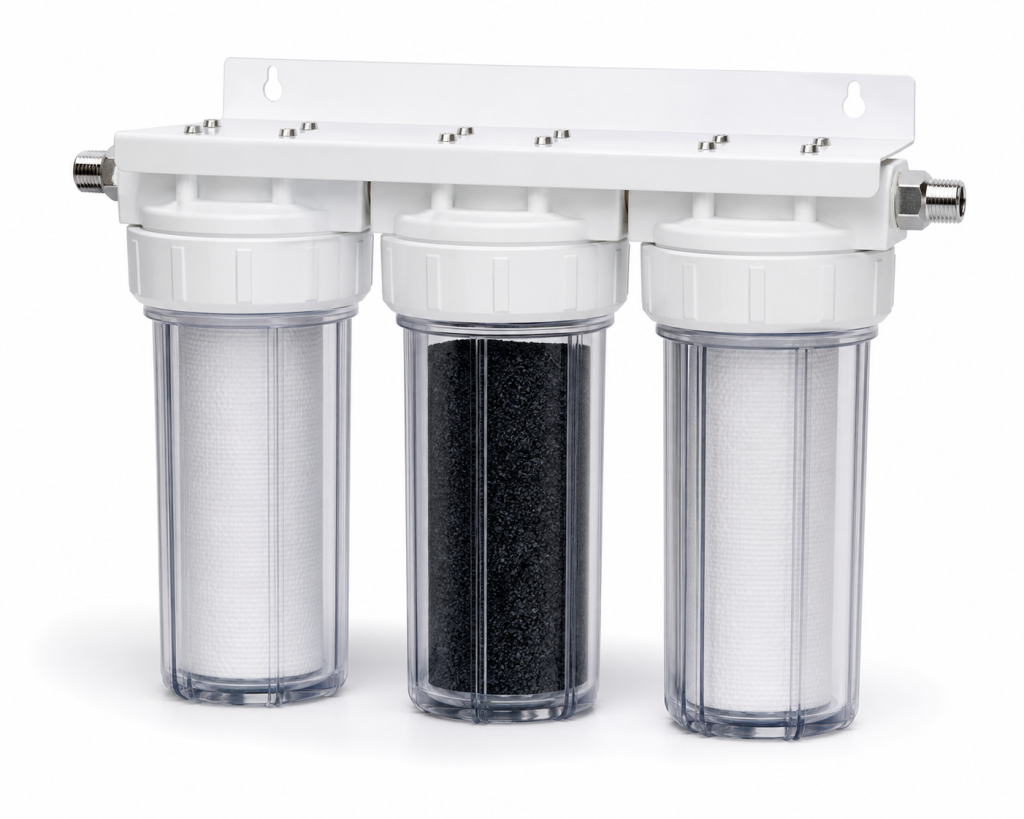
The first recommended strategy for preventing the accumulation of PFAS in the body would of course be domestic water filtration. Since PFAS are found in varying concentrations in municipal water systems and private wells, it makes perfect sense to stop PFAS as it comes into the house [point of entry] or at least at the kitchen faucet [point of use]. While there are thousands of modern water purifiers with activated charcoal, we should be asking, “What kind of Activated charcoal?”
Coal-based AC works well for surface water, which is often more polluted with toxins [see List below]. But in the case of groundwater and municipal supplied water, microporous coconut-based AC will likely be more effective. Also, if the contamination is persistent and pervasive, then using reusable, refillable AC filters on a regular schedule would be more economical.
R5 AC Refillable Water Filter Units -
Which Works Best for Commercial/Industrial Water Purification - Activated Charcoal or Ion Exchange?
PFAS is a micropollutant, but its molecular weight is also a factor. When the molecular weight of the chemical you are dealing with is higher, as in many long-chain PFAS [more than 6 carbon atoms], then activated charcoal performs best [up to 90% effective]. Also, activated charcoal can be reactivated and used again while ion exchange resins are limited to one-way use. That leaves us with, which activated charcoal?
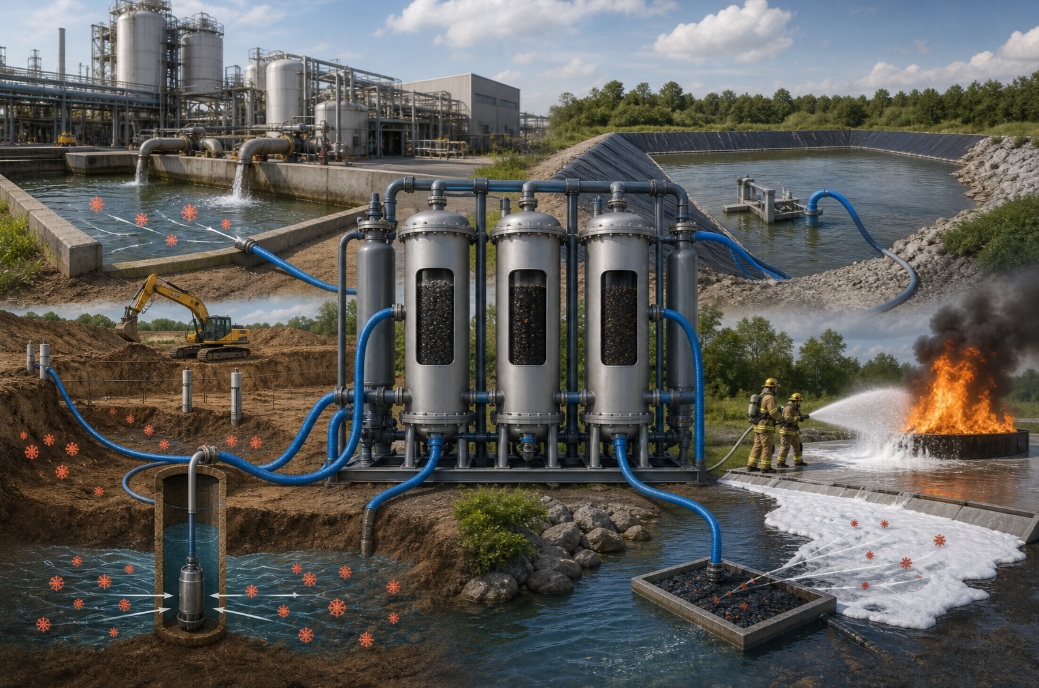
- Where groundwater or prefiltered, municipal water is the primary source, then highly microporous coconut-based activated charcoals have superior adsorption and retention of PFAS. Groundwater typically has less organic contamination which can plug up the micro pores. Also, coconut-based activated charcoals have the lowest Global Warming Potential.
- When surface water is the primary source, as from industrial/manufacturing process water, soil remediation, landfill leachate, and firefighting foam [historically one of the largest sources of high concentration PFAS], then activated coal-based or wood-based carbon with their widespread porosity are the best choice. Because surface water is often co-contaminated with organic material, the meso/macro pore structure of coal/wood-based activated carbons is better able to tolerate pore blockage and still adsorb PFAS and other toxic compounds.
- Blends are often tailored to specific customer needs and treatment conditions. Look for filter grades listed as NSF/ANSI [Standard 53].
Check out our range of BULK FireBrand™ products for commercial/industrial applications.
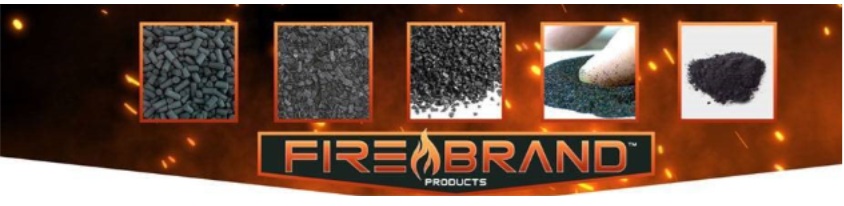
- Activated Charcoal Powder is not recommended as a filter media for household water filters. The fine particles can be very difficult to remove. Without even finer mesh filters to remove the small particles, and extensive back washing, the quality of the water may be free of toxins but not clear.
In Conclusion
Once again Activated Charcoal demonstrates both its amazing diversity of applications, and also its simplicity. Whether it was used for water preservation on sailing ships some 600 years ago, or in modern spaceships, or in your home water filter, or for industrial scale applications, Charcoal Works®.
Here’s to your health!
Part 2 - The Role of Activated Charcoal in the Removal of PFAS from the Human Body
Call us with any questions you may have and we will try to steer you in the right direction. 308-665-1566

Author: John Dinsley
John Dinsley is co-owner of Charcoal House LLC, an educator, writer, and longtime researcher of activated charcoal applications. Trained as a lifestyle counselor, John has taught public health programs, workshops on charcoal, hydrotherapy, nutrition and other natural remedies seminars across the U.S. and internationally.