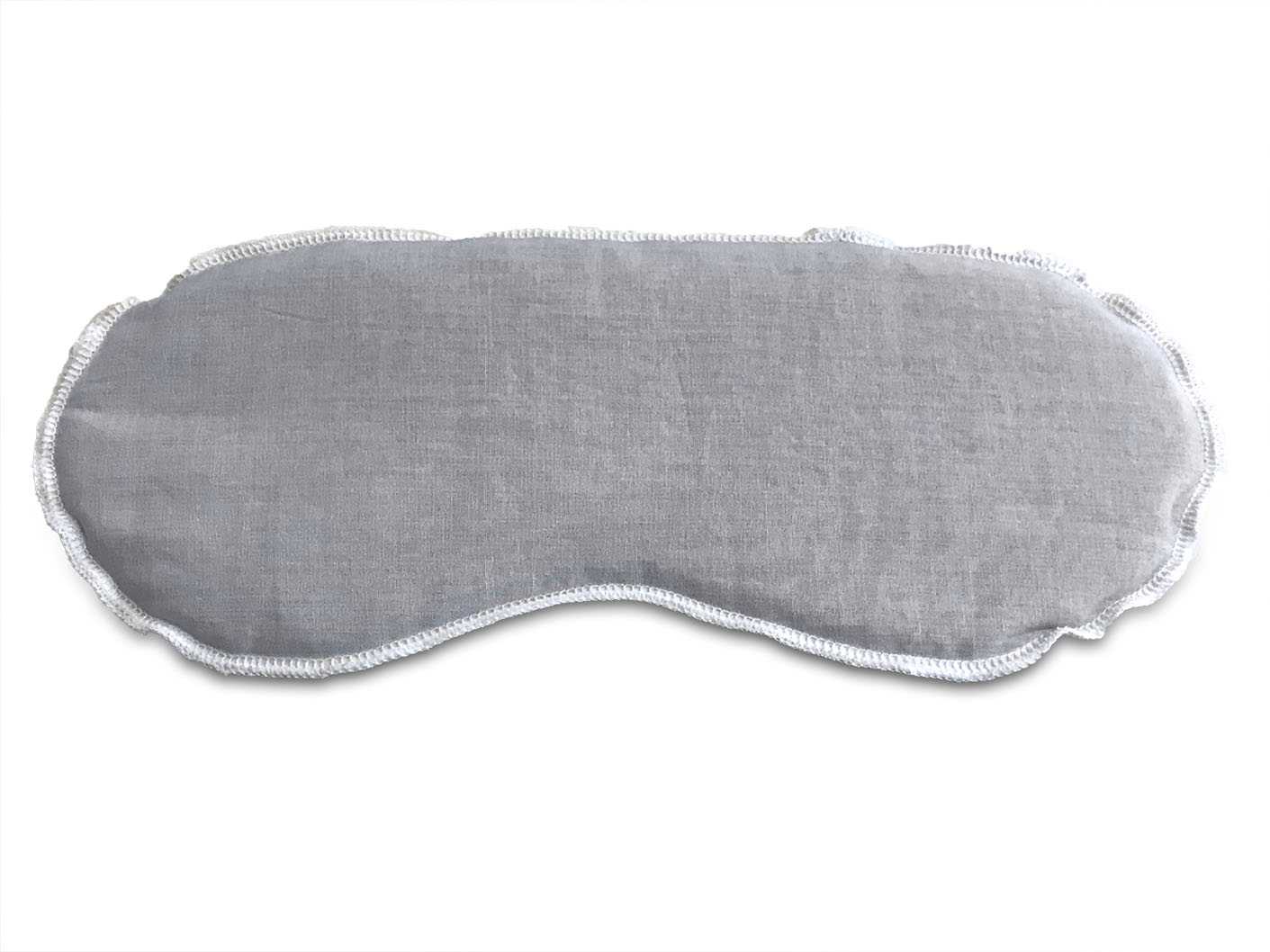
Just The Eye Pad, No Cover, No Straps - REUSABLE - Very Soothing, Use Wet Or Dry - (Wet Is Best!)
This is soft organic cotton eye pad filled with a proprietary blend of coconut shell activated charcoal granular, for sore and computer weary eyes. Also ideal for inflammation of the eyes, pink eye, scratched eyes and more. So easy to use, no straps, however, to keep on securely, place our organic sleep mask over the eye pad.
Simply run the eye pad under the temperature of water you prefer (I like it hot, it feels so good!), and then squeeze out as much water as you can. The first few times that you run under the water, you will see charcoal water coming out, this is normal and totally safe.
Made with all organic, un-dyed, pure 100% natural cotton (American grown and manufactured organically)
Pre-washed (non-chlorinated water, no soaps/detergents)
Hang to dry when using each night. If you use only occasionally, then after drying, store in plastic baggie or sealed glass jar, such as a mason jar). I use mine often, so I just hang it in the bathroom to use again the next evening.
Your new eye pad will easily be effective up to six months when used on a daily basis. If you have an eye condition, then we recommend replacing it at least every two months.
Hi Kimberly,
I am so very grateful to you and John. Thank you for who you are and for devoting your lives to helping so many people improve their health and lives through your knowledge and experience and caring support around the incredible uses and healing power of activated charcoal. I have benefited tremendously from your products and videos and our converations - the advice and help you and John and your team have so freely provided through the years.
I want to especially thank you for one amazing healing I’ve experienced more recently with your charcoal products and procedures. For years I had dry eyes that caused scratchiness, blurred vision, and small shooting pain in my eyes. It got so bad that some nights my eyelids would stick to my eyes. I would wake up from seering pain until I could feel my way to a faucet to start putting water in my eyes.
To try to help me, one optometrist put permanent punctal plugs in the lower tear ducts of each eye. That did help some, but did not stop the dryness altogether and might have resulted in infections until the plugs were removed. All of the other traditional medical professionals I saw said dry eyes were common and there was not much to be done about it. They recommended various brands of eye drops that all made my eyes itch non-stop.
After twenty years and prayers, a few years ago I learned that one of the factors (along with medications, congenital conditions, and your environment, for instance) that can cause dry eyes is Meibomian Gland Dysfunction. Since so many people have problems with dry eyes, I hope some of this information can be helpful.
1.0 Meibum
Meibum is a lipid-rich secretion that coats the tear film and protects the eyes from drying out and other environmental hazards. It is produced by the meibomian glands, which are located in the eyelids. It is one of the liquids that lubricate the eyes.
https://www.ncbi.nlm.nih.gov/
2.0 “Meibomian gland disease: the role of gland dysfunction in dry eye disease”
Meibomian gland dysfunction (MGD) is an umbrella term that encompasses several meibomian gland disorders, ranging from congenital to acquired. Disruption of meibomian gland function negatively impacts both the quality and quantity of meibum secreted, which in turn affects ocular surface health through changes in tear film composition. Increased tear evaporation, hyperosmolarity, inflammation, and ocular surface damage can subsequently occur. This may cause discomfort, visual disruption, and sensation of dry eye.
https://www.ncbi.nlm.nih.gov/
3.0 Chronic Meibomian gland disease
When MGD becomes a chronic problem, and the glands are constantly blocked or clogged, oil secretion is impossible and can cause permanent damage in the tear film as well as dry eye syndrome. The risk of developing MGD increases with age— with increased prevalence among those age 40 and older. Jun 1, 2020
I found an optometrist in my area who specialized in dry eye treatment. She said we all have bacteria in our eyes and in our meibomian glands. But when our glands become clogged over a long time, the bacteria increase. Many of the tiny glands in my eyes were severely clogged and dying, and my eyes were very infected with bacteria. An enhanced photo she took showed a thin milky gel that had almost covered my lower and upper eyelashes and eyelids. Also, instead of the meibomian glands ending at the surface of my eyelids, many were a fraction of that length and ended way below my lid. I also had indentation in the surfaces of my eyelids from where the glands should have been.
She used a gentle, soothing suctioning procedure to draw the clogged material out of all of my glands. She then recommended a special foaming eye soap and also an anti-bacterial gel to put around my closed eyes each night going forward to help keep the bacteria down.
I knew immediately that I needed to use charcoal poultices to help heal my glands. Each night for six weeks, I made two small poultices with charcoal, organic ground flaxseed, and water and put that mixture into small paper towel sections, folded up, according to the video on your website. I put double-sided tape on just the top surface of each poultice. I closed my eyes, then put on one of your silk charcoal masks, then slipped one poultice underneath each side of the mask and onto my closed eyes, with the tape side of the poultice sticking to the poultice and also sticking to the inside of the mask to hold it in place. I wore the mask and poultices through the entire night.
When I had my follow-up visit with the optometrist, she was astounded. She said I had made incredible progress, that my meibomian glands were actually regrowing amazingly well. When I told her I was following her instructions and also using the poultices, she became alarmed and asked me to stop the poultices since that prevented her from knowing how much the eye soap and gel were helping. Of course I didn’t stop the poultices!
I now occasionally use the soap and gel she provided, but I mainly use the poultices with the silk mask and hardly ever have any problems now with dry eyes.
Thank you again for your incredible service to us all!
Very gratefully,
Vivian
Hi Kimberly,
I am so very grateful to you and John. Thank you for who you are and for devoting your lives to helping so many people improve their health and lives through your knowledge and experience and caring support around the incredible uses and healing power of activated charcoal. I have benefited tremendously from your products and videos and our converations - the advice and help you and John and your team have so freely provided through the years.
I want to especially thank you for one amazing healing I’ve experienced more recently with your charcoal products and procedures. For years I had dry eyes that caused scratchiness, blurred vision, and small shooting pain in my eyes. It got so bad that some nights my eyelids would stick to my eyes. I would wake up from seering pain until I could feel my way to a faucet to start putting water in my eyes.
To try to help me, one optometrist put permanent punctal plugs in the lower tear ducts of each eye. That did help some, but did not stop the dryness altogether and might have resulted in infections until the plugs were removed. All of the other traditional medical professionals I saw said dry eyes were common and there was not much to be done about it. They recommended various brands of eye drops that all made my eyes itch non-stop.
After twenty years and prayers, a few years ago I learned that one of the factors (along with medications, congenital conditions, and your environment, for instance) that can cause dry eyes is Meibomian Gland Dysfunction. Since so many people have problems with dry eyes, I hope some of this information can be helpful.
1.0 Meibum
Meibum is a lipid-rich secretion that coats the tear film and protects the eyes from drying out and other environmental hazards. It is produced by the meibomian glands, which are located in the eyelids. It is one of the liquids that lubricate the eyes.
https://www.ncbi.nlm.nih.gov/
2.0 “Meibomian gland disease: the role of gland dysfunction in dry eye disease”
Meibomian gland dysfunction (MGD) is an umbrella term that encompasses several meibomian gland disorders, ranging from congenital to acquired. Disruption of meibomian gland function negatively impacts both the quality and quantity of meibum secreted, which in turn affects ocular surface health through changes in tear film composition. Increased tear evaporation, hyperosmolarity, inflammation, and ocular surface damage can subsequently occur. This may cause discomfort, visual disruption, and sensation of dry eye.
https://www.ncbi.nlm.nih.gov/
3.0 Chronic Meibomian gland disease
When MGD becomes a chronic problem, and the glands are constantly blocked or clogged, oil secretion is impossible and can cause permanent damage in the tear film as well as dry eye syndrome. The risk of developing MGD increases with age— with increased prevalence among those age 40 and older. Jun 1, 2020
I found an optometrist in my area who specialized in dry eye treatment. She said we all have bacteria in our eyes and in our meibomian glands. But when our glands become clogged over a long time, the bacteria increase. Many of the tiny glands in my eyes were severely clogged and dying, and my eyes were very infected with bacteria. An enhanced photo she took showed a thin milky gel that had almost covered my lower and upper eyelashes and eyelids. Also, instead of the meibomian glands ending at the surface of my eyelids, many were a fraction of that length and ended way below my lid. I also had indentation in the surfaces of my eyelids from where the glands should have been.
She used a gentle, soothing suctioning procedure to draw the clogged material out of all of my glands. She then recommended a special foaming eye soap and also an anti-bacterial gel to put around my closed eyes each night going forward to help keep the bacteria down.
I knew immediately that I needed to use charcoal poultices to help heal my glands. Each night for six weeks, I made two small poultices with charcoal, organic ground flaxseed, and water and put that mixture into small paper towel sections, folded up, according to the video on your website. I put double-sided tape on just the top surface of each poultice. I closed my eyes, then put on one of your silk charcoal masks, then slipped one poultice underneath each side of the mask and onto my closed eyes, with the tape side of the poultice sticking to the poultice and also sticking to the inside of the mask to hold it in place. I wore the mask and poultices through the entire night.
When I had my follow-up visit with the optometrist, she was astounded. She said I had made incredible progress, that my meibomian glands were actually regrowing amazingly well. When I told her I was following her instructions and also using the poultices, she became alarmed and asked me to stop the poultices since that prevented her from knowing how much the eye soap and gel were helping. Of course I didn’t stop the poultices!
I now occasionally use the soap and gel she provided, but I mainly use the poultices with the silk mask and hardly ever have any problems now with dry eyes.
Thank you again for your incredible service to us all!
Very gratefully,
Vivian